







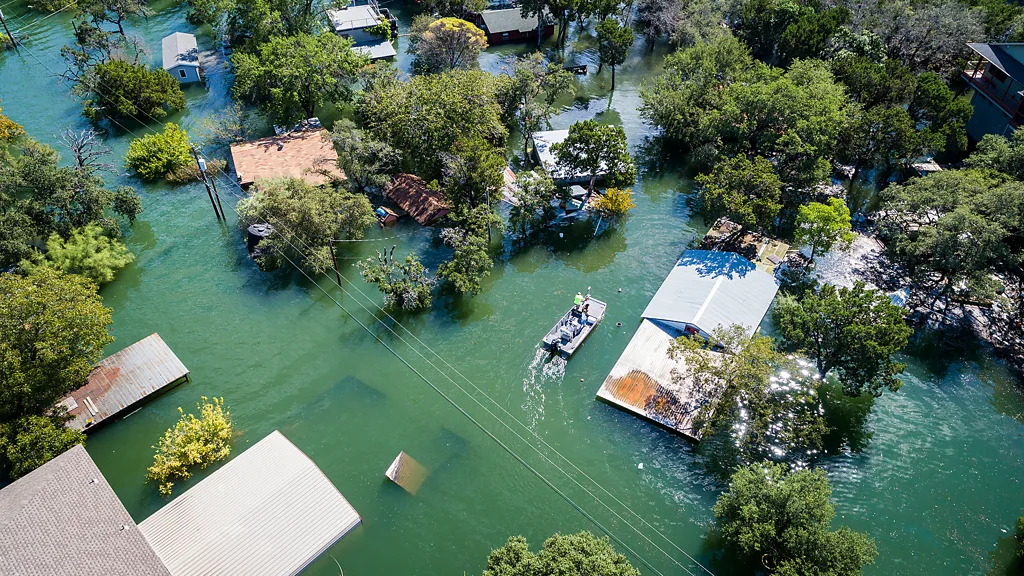
Extreme weather events are making it hard to insure homes in certain parts of the US. What happens when insurance companies simply stop insuring?
When Frances Acuña received her flood insurance quote for the coming year, she got a shock: it would be increasing from $450 to $1,893 (£355 to £1,490). “I couldn’t pay it,” she says. “And so now I don’t have flood insurance. But I don’t feel alone as most of my neighbours don’t have flood insurance either.”
Acuña, a single mother-of-three, lives in Dove Springs in south-east Austin, Texas, an area that had, until recently, escaped the mass gentrification seen in the rest of the city. That is changing, says Acuña. The astronomical rise in flood insurance, coupled with an affordable housing crisis, is pushing many historic Latino communities out of the area.
In March 2024, Acuña, who is an organiser at Go Austin, a coalition working to improve the health of local communities, will leave the neighbourhood she has lived in for decades. “I bought this house thinking I would die in it,” she says, in tears over the decision she has been forced to make. “But I can’t afford to live here anymore.”
Acuña’s insurance went up because of a change in floodplain mapping. In 2018, the National Weather Service updated its flood models to reflect 25 years’ worth of flood data. Thousands of houses in Austin that were previously expected to flood only once in every 500 years were upgraded to a risk of one in every 100 years.
by bbc