


what you need to know
Besigye lawyers ask court martial to send the ruling it made today to the Constitutional Court for interpretation, arguing that the military court was acting superior to the supreme laws of the land
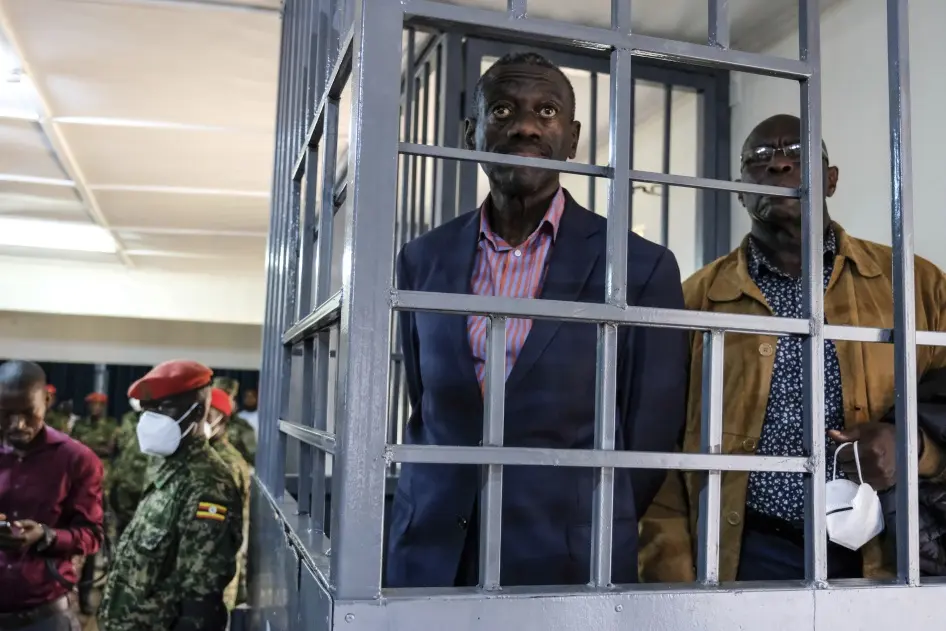
The defence team representing opposition figure Dr. Kizza Besigye and his associate Hajj Obeid Lutale on Tuesday sought constitutional clarity after the General Court Martial dismissed their objections and ordered the accused to take a plea.
Led by Kenyan senior counsel Martha Karua and constitutional lawyer Erias Lukwago, the defence raised four constitutional questions challenging the court martial’s jurisdiction and impartiality in the trial.
Key Objections Raised by the Defence
- Undefined Offenses:Defence counsel Ernest Kalibbala argued that the charges were vague and violated Article 28(12) of the Constitution, which mandates that offenses and penalties must be clearly defined by law. Kalibbala contended that the charge of “endangering the security of defence forces” was overly broad and lacked specificity.
- Impartiality of the Court Martial:Lukwago questioned whether a military tribunal, composed of members of the UPDF, could provide a fair and impartial trial to civilians. He cited Article 28(1), which guarantees a fair hearing before an independent and impartial court.
- Civilian Jurisdiction:The defence referred to previous rulings by constitutional courts, asserting that civilians should not be tried under military tribunals. They contended that the UPDF Act and its regulations could not supersede the Constitution’s provisions on civilian authority and fair trials.
- Subordination of the Military to Civilian Authority:The defence cited Article 208, which establishes the UPDF as subordinate to civilian authority, and argued that the court martial’s actions risk undermining the Constitution’s supremacy.
Defence Seeks Constitutional Reference
The defence team urged the court martial to refer these constitutional questions to the Constitutional Court under Article 137(1). “This court cannot elevate itself above the Constitution. Matters of interpretation fall squarely within the jurisdiction of the Constitutional Court,” Lukwago emphasized.
Court Martial’s Ruling
Earlier, Brigadier-General Freeman Mugabe, chairman of the court martial, dismissed the defence’s objections regarding the legality of the charges and jurisdiction.
He ruled that the trial falls under the UPDF Act and stated that there was no breach of international extradition protocols when the accused were brought to Uganda from Kenya.
“The agreement on defence and security for suspected serious crimes did not amount to abduction,” Gen. Mugabe said. “Jurisdiction is a creature of statute, and this court has the power to try this matter.”
Controversy Surrounding the Trial
The trial has drawn widespread criticism, with concerns about the abduction of Dr. Besigye and Hajj Lutale from Kenya in November 2024. The defence maintains that their transfer violated international extradition laws.
Further controversy arose when defence lawyer Eron Kiiza was summarily arrested in court, convicted of contempt, and sentenced to nine months in prison without trial.
As the defence pushes for constitutional interpretation, the trial continues to spotlight issues of judicial independence, fairness, and adherence to the rule of law.
Continue reading through the link below.
https://nilepost.co.ug/court/237113/besigye-defence-team-raises-constitutional-questions-before-court-martial: Besigye Defence Team Raises Constitutional Questions Before Court Martial 
